
“If freedom were a form, it would be a never-ending undulating boundless shape that is in perpetual motion” Karim Rashid
Think back to the turn of the millennium. There was a palpable sense of stepping into the future, a feeling amplified by the objects we held in our hands. The hard, geometric edges of the 1980s and early 90s seemed to dissolve, replaced by something fluid, amorphous, and profoundly new. Products looked less like they were assembled and more like they had been born. They were like drops of liquid metal, frozen in time.

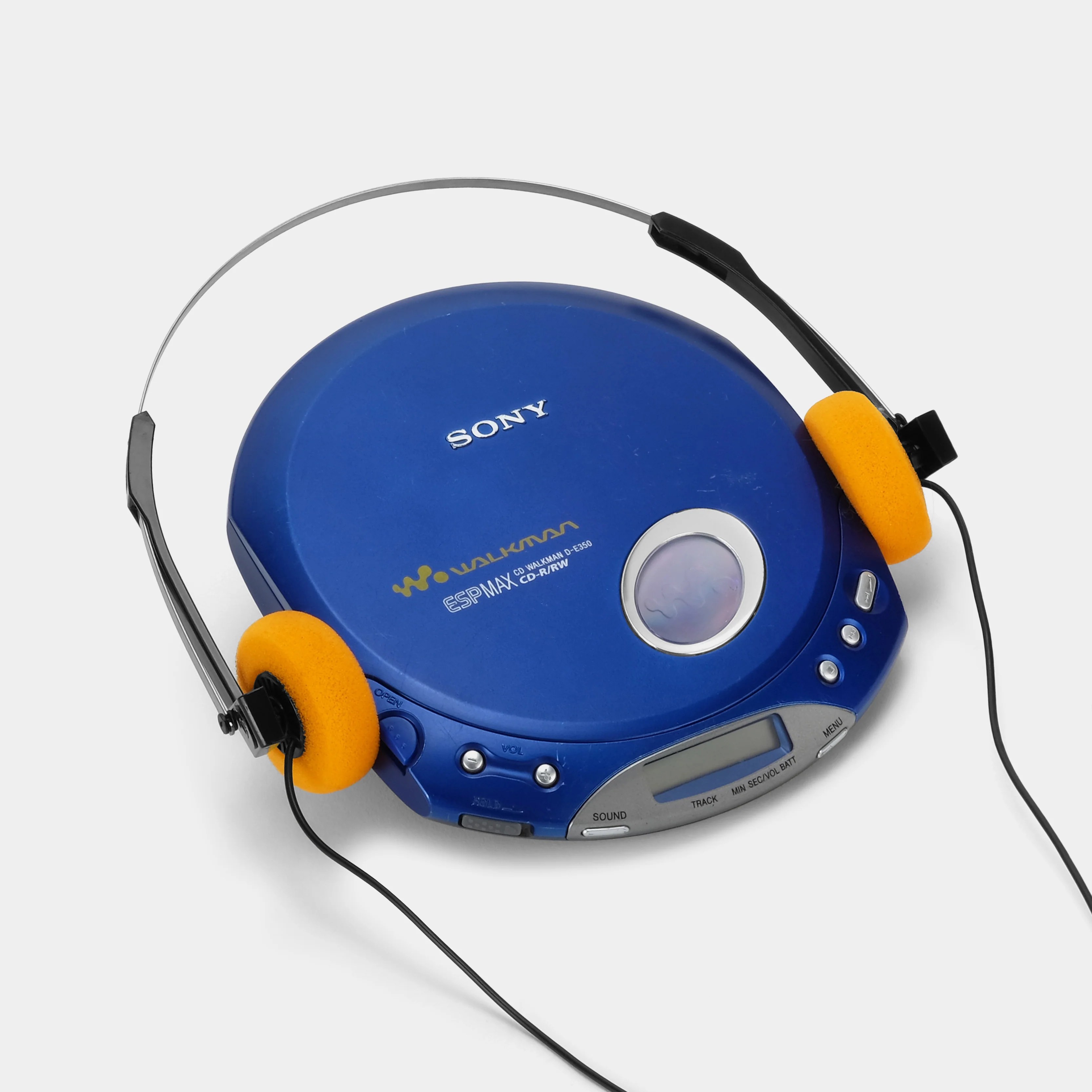
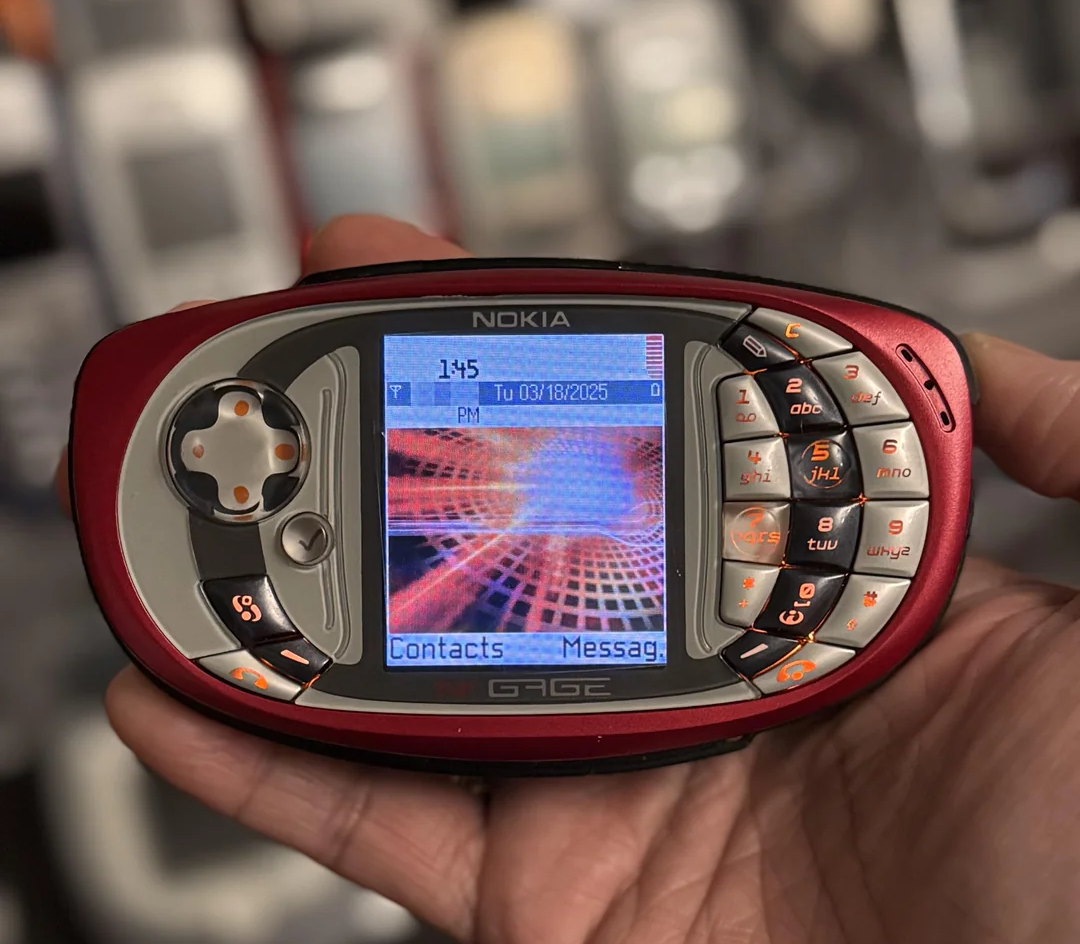
This was the era of the blobject. Coined by critic Steven Skov Holt, the term perfectly captured the essence of a design movement that went by many names: Blobism, Organic Minimalism, Biomorphism. It was a time when industrial designers, fueled by the optimism of the dot-com boom and the promise of a new century, sought to break free from the box. From the playful translucence of the first iMac to the futuristic curves of an Oakley watch, our technology began to feel organic, sensual, and alive.
But this was not merely a stylistic whim. This aesthetic revolution wasn’t born in a designer’s sketchbook alone. It was forged in the digital crucible of a new generation of software that fundamentally changed the relationship between imagination and manufacturing. This is the story of how code unlocked a new physical reality.
The Blobject Manifesto: A New Form for a New Millennium
The blobject was more than just a curvy shape; it was a philosophical statement. It was a rejection of the cold, hard functionalism of the past and an embrace of a more human-centric, emotional design language. These objects were meant to be touched, held, and experienced. They were ergonomic, tactile, and often rendered in bright, optimistic colors or translucent plastics that hinted at the complex technology within.

Three products, all released in the pivotal year of 1998, brought this new form to the masses and cemented its place in the cultural zeitgeist:
- The Apple iMac G3: With its colorful, translucent, all-in-one shell, the iMac was the antithesis of the beige, utilitarian PC box. It was friendly, approachable, and turned the personal computer into a piece of decorative furniture.
- The Volkswagen New Beetle: A nostalgic nod to the past, but rendered in the new language of smooth, perfectly symmetrical curves that would have been impossible to manufacture with the technology of the original Beetle’s era.
- The Nike Triax Watch: A sleek, wrist-hugging form that seamlessly integrated the case and the band, looking more like an alien artifact than a traditional timepiece.

This movement was championed by a new wave of designers who became rock stars in their own right. Karim Rashid spoke of “sensual minimalism,” creating undulating, boundless shapes that felt like they were in perpetual motion. Ross Lovegrove, inspired by nature, pursued what he called “organic essentialism,” reducing forms to their most efficient and beautiful state. And Marc Newson became a master of the biomorphic, with his iconic, riveted aluminum Lockheed Lounge chaise looking like it was sculpted for a futuristic space traveler.
These designers were dreaming of a new world, but to build it, they needed a new tool.
The Digital Chisel: How NURBS Gave Form to Imagination
For most of the 20th century, industrial design was constrained by the physical world. Designers worked with clay, wood, and foam. Curves were created by hand, guided by eye and physical templates. The tools of mass production (molds, presses, and lathes) favored straight lines and simple, geometric curves. Creating complex, organic, and perfectly smooth surfaces was extraordinarily difficult, time-consuming, and expensive.
The game-changer was the maturation of Computer-Aided Design (CAD) software and, specifically, a mathematical model known as NURBS.
NURBS stands for Non-Uniform Rational B-Splines. While the name is a mouthful, the concept is revolutionary. Think of it as the ultimate digital French curve. Before NURBS, designers using CAD were often limited to combining simple geometric shapes (spheres, cubes, cylinders). NURBS, however, allowed them to create mathematically perfect, infinitely variable, and seamlessly smooth curves and surfaces by manipulating a series of control points.

This was the digital chisel. A designer could now pull and push on a virtual surface on a screen, and the software would instantly calculate the complex, flowing form with absolute precision. The undulating grip of a mouse, the aerodynamic shell of a car, the seamless casing of an MP3 player… These forms could be born and perfected in a digital space, free from the constraints of physical modeling.
But the revolution didn’t stop on the screen. The second piece of the puzzle was Computer Numerical Control (CNC) machining. The same digital NURBS file that defined the object on the designer’s computer could be sent directly to a machine on the factory floor. This machine would then carve the mold for the plastic casing or mill the aluminum part with the exact same precision as the digital model. The gap between imagination and reality had been bridged.
For the first time in history, the complexity of a designer’s vision was no longer the primary barrier to manufacturing. If you could model it, you could make it. This technological liberation is what truly unleashed the blobject. The fluid, organic forms that defined the era were a direct expression of the newfound freedom that NURBS-based software gave to designers.
A Legacy in Liquid Metal
The pure blobject aesthetic may have peaked in the early 2000s, but its legacy is everywhere. The movement fundamentally changed our expectations of what manufactured objects should look like. The seamless, unibody construction of the modern smartphone is a direct descendant of the blobject’s obsession with smooth, continuous surfaces. The ergonomic grips on our power tools, the flowing lines of our kitchen appliances, and the aerodynamic forms of our cars all owe a debt to the digital revolution of the 90s.
Today, with the Y2K aesthetic seeing a major revival, we are looking back at these designs with a new appreciation. They represent a unique moment of optimism, a time when technology felt less like a source of anxiety and more like a tool for building a more beautiful, more human, and more interesting future.

This raises a fascinating question. We are now entering an age of AI-driven generative design, where algorithms can create forms far more complex than any human could manually design. Are we on the cusp of a new “blobject” revolution, one where the shapes are even more alien, more complex, and more organic? And what does it mean for us when our tools begin to dream for us? The liquid metal of the 90s may have just been the first ripple before the wave.
Share your thoughts